
The starting point: a portfolio stuck in a PDF
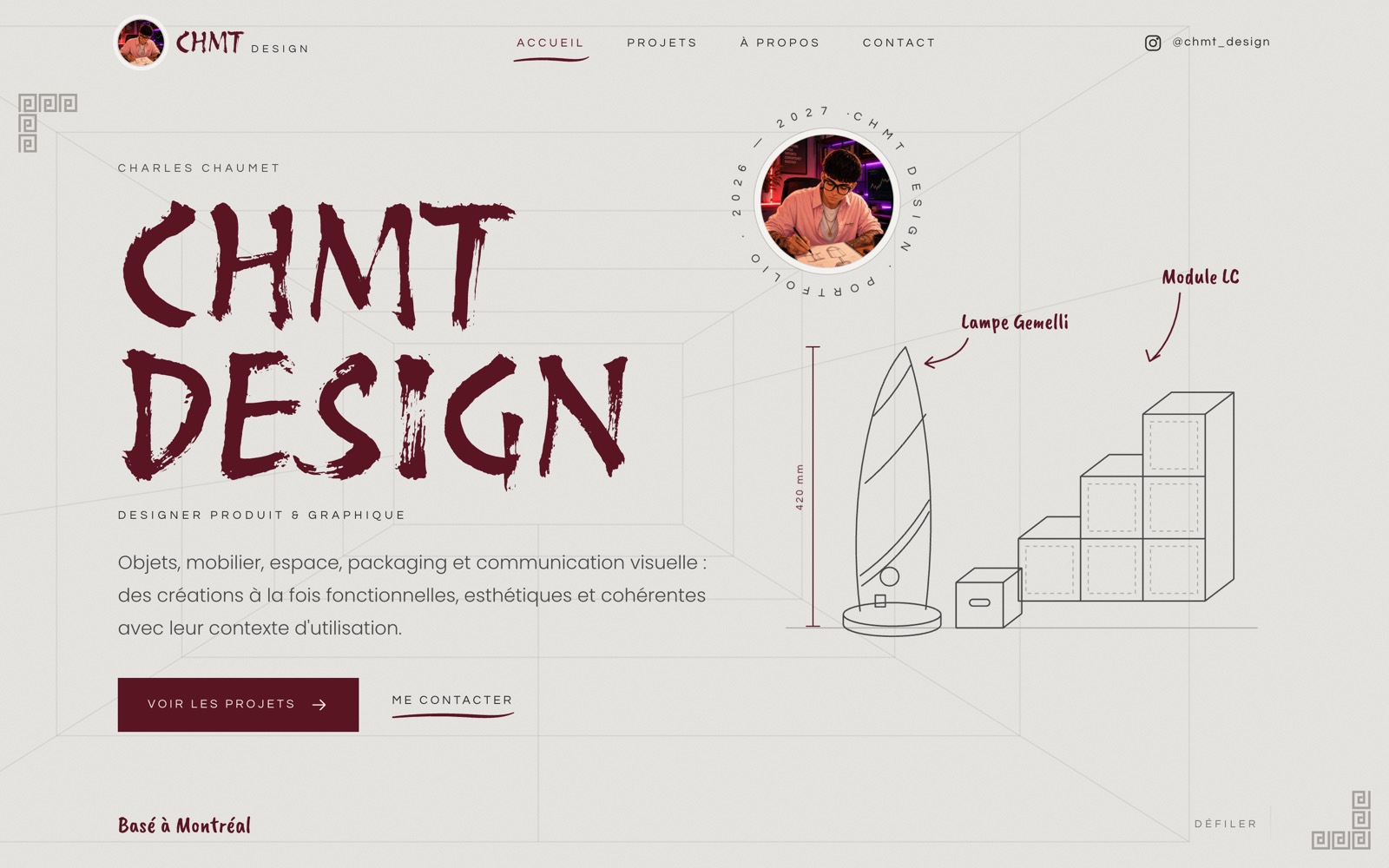
CHMT Design is the studio name of Charles Chaumet, an independent product and graphic designer in Montréal. His work covers furniture, objects, packaging, interior and space design, and visual communication. Until this project, all of it lived in a single PDF portfolio.
A PDF works for a job application, but much less well as a shop window. It is awkward to read on a phone, it does not appear in Google results, it cannot be linked project by project, and every new piece of work means editing and exporting the whole file again.
The brief was therefore simple: a real portfolio website that shows each project properly, gives potential clients an easy way to get in touch, and lets the designer add new work without calling a developer. In other words, a website with a content management space rather than a static brochure.
What we built
- Home page: an introduction, selected projects, the disciplines he works in, a short about section, an index of projects, his design process and a contact call to action.
- Projects: every project from the portfolio, filterable by discipline (product design, graphic design, furniture, space design, packaging, visual communication), with a dedicated page for each one.
- About: his background and approach.
- Contact: a message form, plus email and Instagram.
- Legal pages: legal notice, privacy, cookies, terms of use and terms of sale.
His four-step method (observe, sketch, draw, prototype) is presented on the home page, so a visitor understands how he works before reaching out.
A private space to publish new projects
The projects from the original portfolio are built into the site itself. The management space only stores what changes: edits to existing projects and new projects added by the designer. This has three practical benefits.
- The site is never empty or broken, even if something goes wrong with the database.
- Pages load fast, because most of the content ships with the site.
- Hosting and database costs stay low, which matters for an independent professional.
From the private space, he can add a project, write its description, upload visuals and choose its discipline. His uploads go to a dedicated storage folder, the only place his account can write to. The management space is protected by a login and excluded from Google.
Design choices
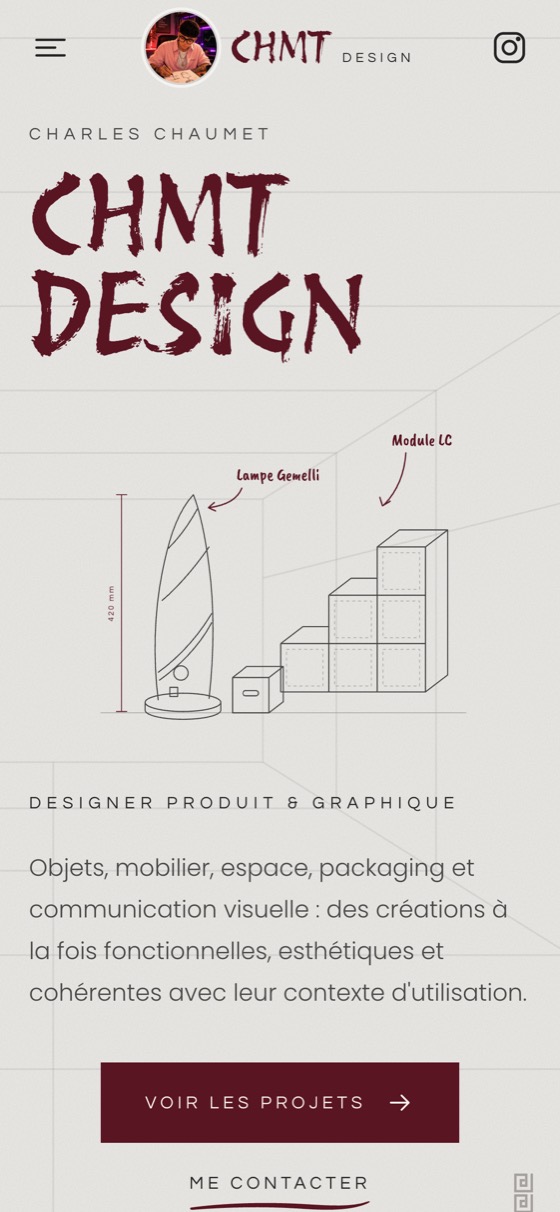
A designer's website has to respect the designer's own visual language. We worked from the identity and layouts of the existing portfolio rather than imposing a style. Images lead, text stays short, and each project page reads like a page of the portfolio, only easier to browse.
The visuals were extracted from the PDF and optimized for the web, so the pages stay light on a phone. As with all our projects, the layout was designed for mobile first, then checked on tablet and desktop.
SEO basics included
Like every site we deliver, the portfolio includes our baseline SEO: each page is pre-rendered so its text is readable by Google and AI tools without JavaScript, every page has its own title and description, and the site has a sitemap, a robots.txt file and structured data. The private space stays out of search results.
For a freelancer, this is what makes a project page findable when a client searches for a type of work. For ongoing visibility work, see our SEO service.
What this project shows
This is a typical case for designers, architects, photographers and other creative professionals: the material already exists, but it needs a structure, a fast website and a simple way to keep it up to date. The site is in French, the language of his Montréal clientele.
If you are planning something similar, our guide to website costs in Canada gives you the budget ranges, and you can contact us to discuss your project (page in French; we reply in English).
Updated November 13, 2026